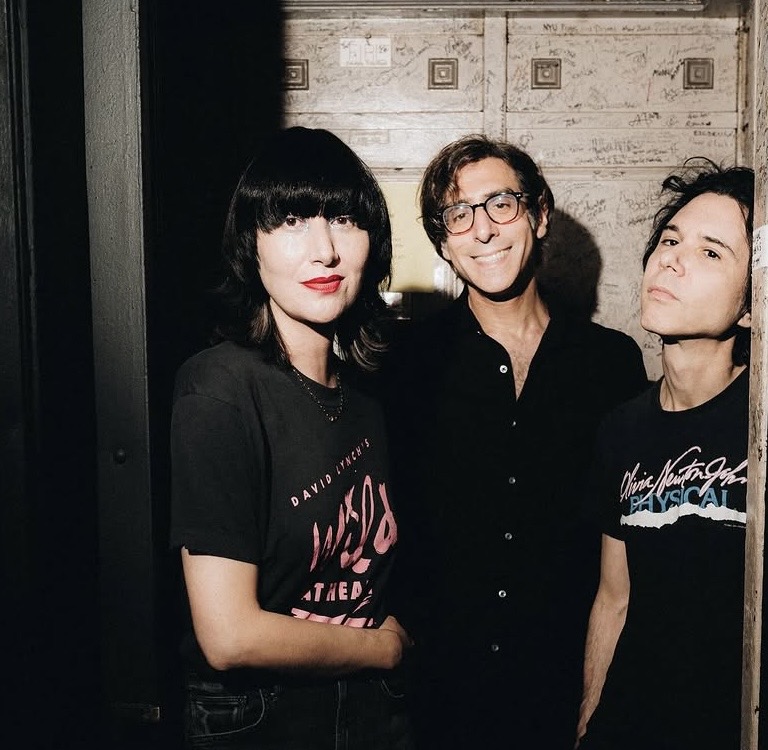
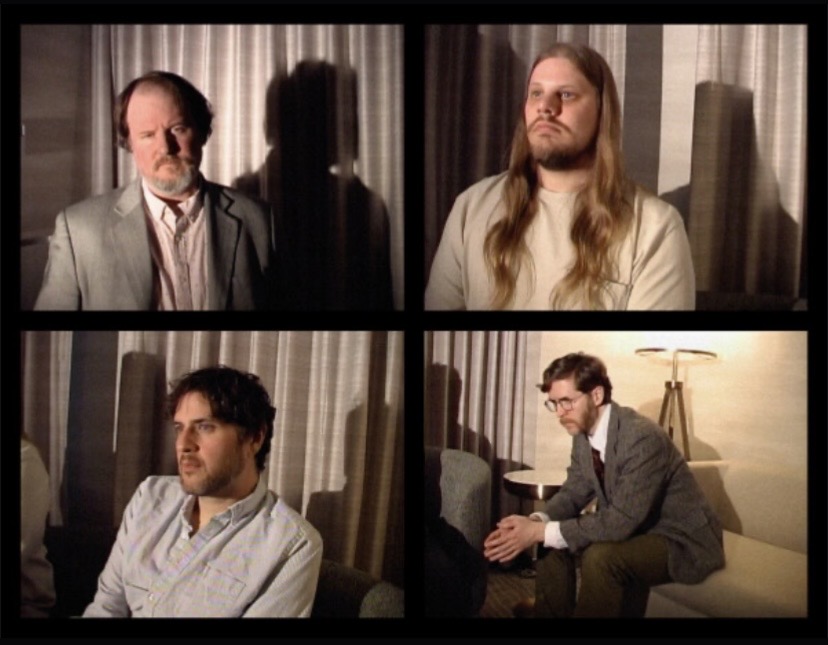
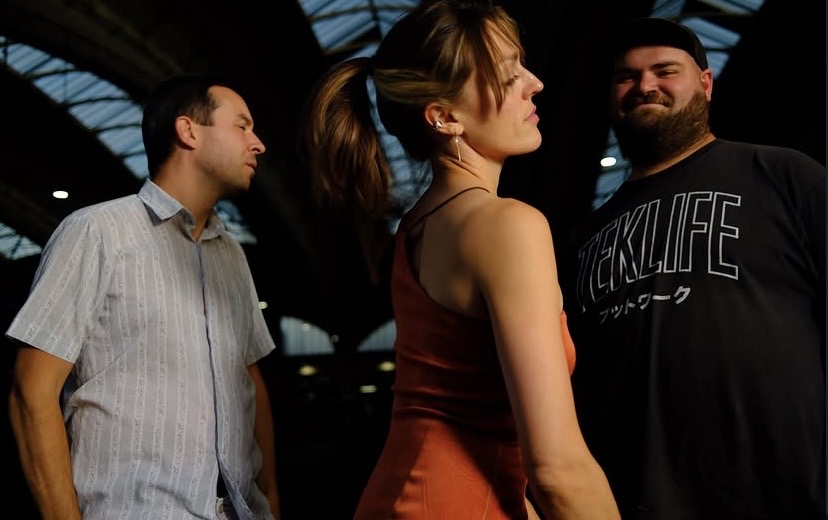
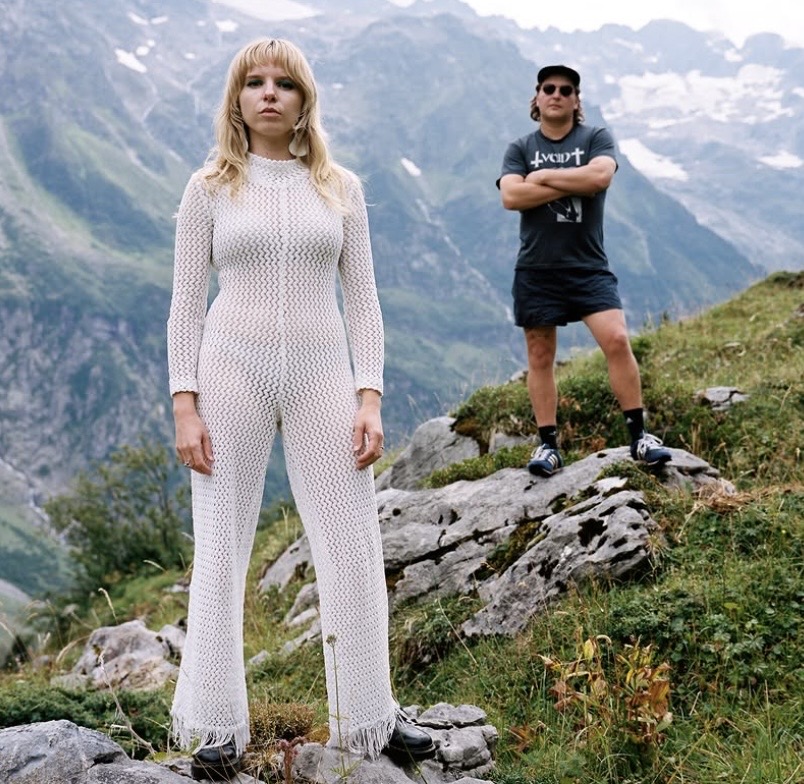
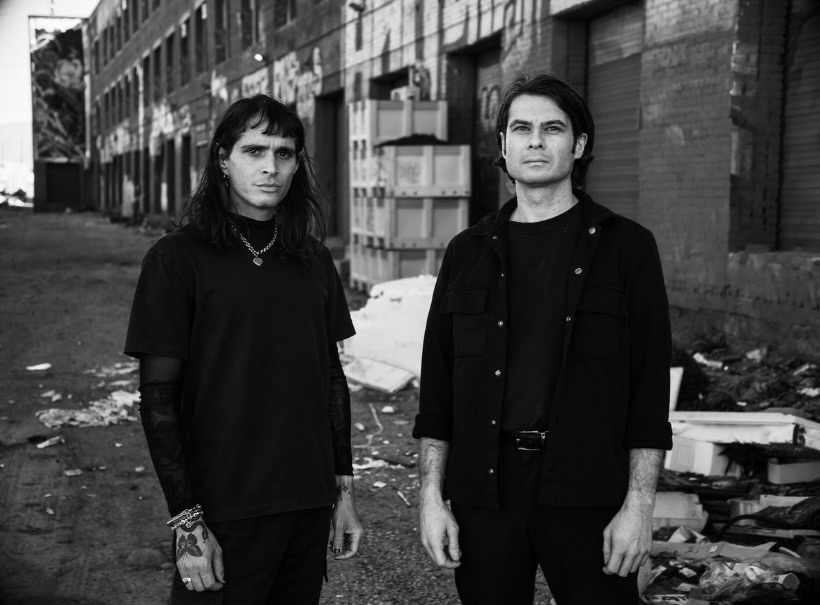
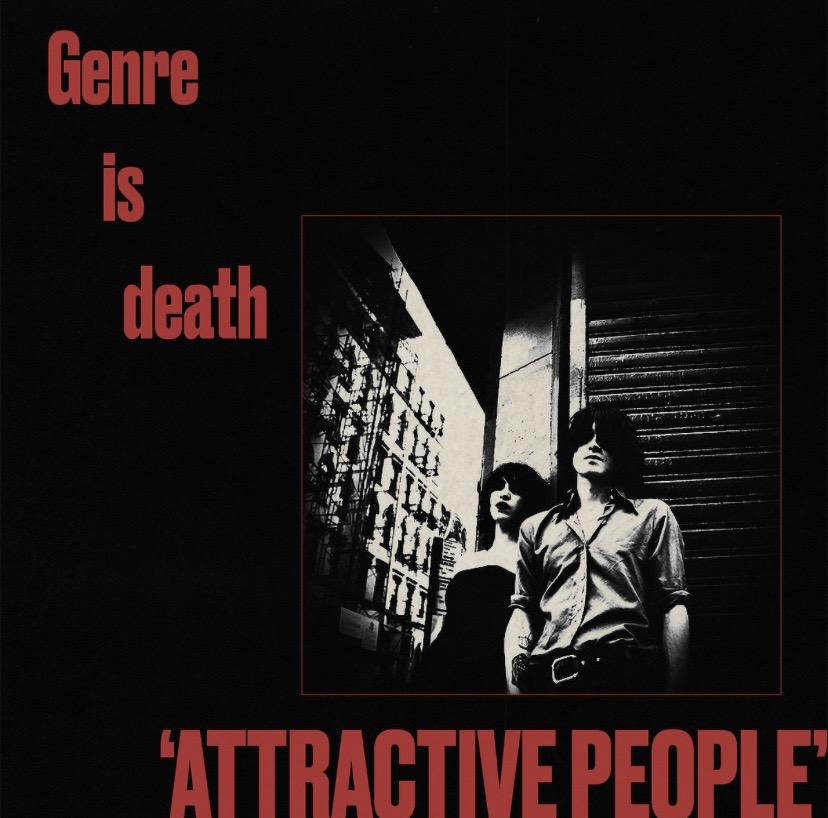
Oklahoma City-based quartet “Chat Pile” have unveiled details of their upcoming third album Who Loves The Sun. The album will be released September 4th via “The Flenser,” and today the band have shared the track “Deep Blue” off the upcoming album. You can listen to the track, as well as pre-order the album below:
Hype can be very annoying. The flavor of the month movies or TV shows start to plague your feed on social media platforms while fans won’t shut up about them or make exaggerated statements like “best movie I’ve ever seen.” More often than not I find myself giving in to the hype, only to be underwhelmed, and that isn’t contrarianism, it’s just that I’m either too picky, too critical, or just have shit taste. The most recent example of that is how I was the only person on the planet who didn’t like Weapons, but every once in a while a movie comes along that lives up to the hype, and proves itself to be something more than just the flavor of the month, and right now that movie is Obsession. OH.MY.GOD. Taking a familiar and rather outdated monkey’s paw trope, but elevating it to its most visceral heights, 26 year old director Curry Barker has struck gold with Obsession. This movie is terrifying, emotional, funny, unsettling, gross, anxiety-inducing, and will evoke just about every emotion known to man, and that’s due to impeccable direction, perfectly timed scares, phenomenal acting, and subject matter that looks surface level on paper, but executed in a way that provokes much thought and discussion. If you’re reading this, chances are you already know the premise. Our protagonist Baron “Bear” Bailey has feelings for his friend Nikki Freeman, but doesn’t have the courage to express his feelings to her, so when he buys a “One Wish Willow” novelty toy that claims to grant one wish per person, he breaks the toy wishing for Nikki to love him more than anyone in the world, and that wish comes true, but backfires very horribly sparking a chain of horrifying acts committed by his now obsessed girlfriend Nikki. Now, I’m sure every possible interpretation of this film has already been expressed through countless reviews or think pieces, but allow me to express my interpretation. Underneath the truly unnerving and uncomfortable Horror scenes, this film comments on the problematic nature of how men view and pursue women. Bear starts off as a pitiful, but likeable guy. You want him to gain confidence and find true love, but when Nikki makes it perfectly clear she’s not into him, instead of moving on, he makes the wish out of frustration, and when he finally gets what he’s always wanted, it’s clear from the start that something isn’t quite right with Nikki. It’s clear she’s being controlled by some sort of outside force. Bear recognizes this, and even expresses how he’s worried about this to his best friend, but instead of taking that opportunity to help her in some way, he lets his personal desires get the better of him and takes advantage of this new version of Nikki who would do absolutely anything for him. This new version of Nikki isn’t the real Nikki he fell in love with, but she’s attached to him and she gives him the love he’s always yearned for. Who’s the real villain here? Is it Nikki, or the guy too cowardly and impatient to let things happen organically? It’s most certainly the latter. This raises the question, if given the opportunity would a lot of men skip the time and effort it takes to truly get to know their love interest and prove themselves to be a worthy partner, just to get what they truly want, sex and their own personal cheerleader? It’s almost as if Bear didn’t really love who Nikki was as a person, but was in love with the idea of being loved by her to fill an empty void. How well did he know her? Did he just love her because she was nice to him? When he realizes the new Nikki isn’t the Nikki he once knew, it’s too late, and now he’s suffering the consequences of his selfishness, because what ensues is some of the most horrifying events I’ve seen in a film in a very long time. Brilliantly portrayed by actress Inde Navarrette, Nikki is terrifying but far from being the villain, because she can’t control it, and though she commits many vicious acts, the fault isn’t hers, it’s Bear’s. That’s what this movie is about at its core, and those themes combined with some very grizzly images and Oscar-worthy acting from Navarrette makes for a Horror masterpiece. Every second of this film is captivating. I’ve seen just about every fucked up Horror film there is to see, so I’m desensitized, but this film truly gave me anxiety and made me jump a few times. That never happens to me. I haven’t been this impacted by a Horror film since 2018 when I watched Hereditary in theaters. Obsession is that damn good. I can’t recommend this movie enough.
Boards of Canada having a large gap in between albums isn’t exactly out of the ordinary, but 13 years? That’s a long time. A lot of us were starting to wonder if we were going to hear from the Scottish duo again, and if so, would it be necessary? Do we need a new Boards of Canada album? Considering their impressive discography of music laced with nostalgia, soaked in retro synths, and rich in ambient atmospherics, the two already have an iconic body of work under their belts. The already mysterious and reclusive duo could have disappeared from the music world completely, which would have added to their mystique, and even though most of us would want to hear new music from the two, this would have been a fitting bow out, but 13 years after their album Tomorrow’s Harvest, it’s evident the duo have more to give, and my God they’ve gifted us with one of their most captivating, hypnotic, and thematically dense albums yet. The album is titled Inferno, and opens with the track “Introit,” which takes its name from the opening of a worship service that’s usually a psalm, hymn, or chant, and the familiar synth arpeggio featured on the track immediately transports us to a world we’ve missed. I liken it to the feeling I had when I saw the opening crawl to Star Wars: The Force Awakens in theaters, but unlike The Force Awakens, what follows this intro is enthralling content. After the familiar sound in “Introit” fades away, we’re immediately introduced to a reinvented Boards of Canada. Sure their signature style is still there, but that sense of childlike wonder and dreamy Retro-futurism takes a back seat while eerie soundscapes, moodiness, and haunting vocal samples are front and center, and I mean it when I say these vocal samples are haunting. Packed with themes such as religion, religious cults, existentialism, and biology, this album perfectly utilizes vocal samples taken from documentaries about the effects of PCP, a conversation between a father and his son who has cut off his entire family to join the “Children of God” cult, Aleister Crowley quotes, a documentary about the development of a chicken embryo, and references to Nostradamus, and this all perfectly gets the duo’s point across without them having to say a word. However, is their point really that clear? Sure they want us to take something away from this album, or else they wouldn’t have made this thing so dense, but I’ve seen countless heady reviews of this album from people claiming with certainty that this album is a critique of religion and religious cult leaders who prey on the vulnerable, or that this is their way of commenting on how our uncertainty on the meaning of life and why we’re here has spawned so many philosophers and religions who try to give us answers on why we’re here and what happens after we die, and the dangers that come with certain religions, and though this is likely what they’re getting at, there’s one thing a lot of people are neglecting to mention when describing this album, and that’s nostalgia. Nostalgia is a word often associated with Boards of Canada. From the children’s TV show and speak and spell samples on Music Has the Right to Children, to the capturing of the feeling you get when you watch your favorite video nasty on Tomorrow’s Harvest, it’s been very clear that retro media has made a lasting impact on the duo, and contrary to popular belief, I don’t think that nostalgia is absent on Inferno. Remember those televangelists your grandparents used to watch? Those frightening red-faced crazy-eyed men who would yell at you through the TV screen? Remember those old documentaries about morbid cult tragedies? Remember all the history we’ve learned about violence and unnecessary wars that were brought on by fundamental religious beliefs? Remember satanic panic? These are all things that are engraved in the history of humanity, and one of the most popular mediums used to teach this history is media, so I don’t think it’s a stretch to say the boys from BOC have nostalgia for these things. That love for retro media is perfectly combined with the overall themes of this record. There’s no telling if there’s going to be another Boards of Canada record after this one, and when that’ll be if there is, but if this is their final album it’s an interesting album to end on, considering it’s their darkest work by far. Maybe that’s where they’re at mentally when viewing the current state of the world, because these are truly frightening times. Christian fundamentalists and conspiracy theorists are currently in the White House, educational programming has been replaced with short-form content online spreading misinformation, and all of these current wars have left many of us anxious and frightened, so it’s no surprise that an album like this would be released in this day and age, but a common theme that prevents this album from being complete doom and gloom is the theme of life itself. From the EKG machine sounds on “Memory Death,” to the heartbeat on the closing track “I Saw Through Platonia,” the preciousness of life is beautifully symbolized, and this reminds us to value life while we can, and though it may seem impossible at times, it’s important to find beauty in the chaos.
Five albums deep in their discography, and New York-based band “Deli Girls” still continue to reinvent themselves sonically. On their new album Losing State, it’s hard not to get the feeling that the band are embarking on a new chapter of their sound. This chapter is a departure from their previous self-titled album, an album that found the band trade in their usual Nu-Metal-tinged Digital Hardcore in favor of an abrasive yet dancey mix of Hardstyle and Rave Punk. Losing State harkens back to the anxiety-ridden heaviness of their early records, music that featured pure unadulterated anger toward the establishment, capitalism, and all forms of bigotry, but this time around the band cranks up the Industrial elements with rapid fire percussion, and lead singer Danny Orlowski’s anger is directed at even more specific realities that are a result of this country’s consumer culture, love for war, and reliance on technology. “If you’re gonna sell me, then pay me,” screams Danny on the track “Location,” a song that progressively gets more and more chaotic and sounds like the soundtrack to the end times. That viciousness in the music and vocals is carried throughout the album and never lets up, sounding like a constant state of Hell. However, with how deeply unsettling this album is musically, not once does it come across as pessimistic. This is protest music. This is fight music, and it faces our anxiety-ridden reality head on in an attempt to reach a point of catharsis. This is “Punk” in the modern age, and Deli Girls are the perfect band to lead the charge.
Due to loss, grief, and immense focus on perfectionism, New York-based act “Bustié’s” sophomore album Throb faced many delays, but now 7 years after their debut Birds of Paradise, the album has finally arrived at the perfect time. Living in the U.S. right now is frightening if you’re a person of color, LGBTQ+, or just simply don’t support a fascist regime, so now more than ever we need music that comes from people of said communities to inspire, provide hope, raise awareness, and provide a dance party of escapism, and Bustié does just that. Combining genres such as Hi-NRG, Synth Pop, EBM, and Freestyle, Throb celebrates the elements that make these genres so undeniable and infectious. Topped with lead member Angelika Padilla’s chant-like vocals that provide another layer of rhythm on top of the already entrancing beats, this music will make anyone want to move. Whether you’re the type to cut up a rug on the dance floor, or the type to stand back and bob your head to the beat, this music is for you. Thematically this album deals with lust, loss, and sexuality, and though it’s often dark sonically, it’s perfectly contrasted with heavy elements of 80’s-styled Pop which helps prevent the album from diving into doom and gloom. It’s Janet Jackson at a Nitzer Ebb concert, and it’s fantastic.
If JPEGMAFIA’s mission was to solidify his status as the torchbearer for Experimental Hip Hop with his new album Experimental Rap, then mission accomplished. In a world where the majority of current Hip Hop is stale and predictable, Peggy champions the idea of being different musically and pushing the envelope, but being six albums in now, his unconventional approach is to be expected, which deems his music predictable. However, that predictability isn’t necessarily a bad thing, because the music market isn’t exactly saturated with people making the same kind of discombobulating noisily radical music he makes, which makes him one of a kind. Peggy is aware of his status as the face of Experimental Hip Hop, and he embraces it, but that embracement is a detriment to this album. These songs sound more caught up in the idea of being experimental and unconventional to the point where much of the interesting instrumental ideas sound unfinished and not fully fleshed out. It’s just a bunch of ideas thrown together to sound as abrasive as possible, and normally that sort of thing sounds incredibly innovative in Peggy’s music, but unfortunately this comes across as a gimmick at this point. A lot of songs have an underwhelming beat switch, Brostep elements that are 15 years too late, and the same rapid-fire flow in damn near every song which gets boring very quickly. Which is a shame because there was a time when every word Peggy spit cut like a knife and you truly felt the aggression, jabs at internet culture, and shots at racist conservatives and performative liberals alike. Those lyrical themes have not left his music, but they unfortunately take a back seat to overly messy directionless instrumentals. JPEGMAFIA is capable of creating some truly inspired and unique music, but when the alternative to predictable music becomes predictable itself, then it’s time to switch things up.
It’s nice seeing barriers being broken in the current Metal community thanks to younger bands daring to blend differing genres and incorporate outside influences. Along with this forward thinking approach, comes the re-evaluation of a genre like Nu-Metal, particularly “Korn.” There was a time when liking a band like Korn was considered uncool amongst Metal elitists. Even during the bands chart-topping glory, there were those who dismissed the band and simply believed they were not “real Metal.” Now, we have a whole generation of young Metal fans who reject rigid views and gatekeeping, and it’s glorious. Korn’s influence is now celebrated and referenced sonically in the music of bands like “Chat Pile,” “Code Orange,” and Austin, Texas band “Portrayal of Guilt.” Fearlessly blending genres such as Screamo, Black Metal, Sludge Metal, Emoviolence and Noise Rock, Portrayal of Guilt have been gifting us abrasive and chaotic music rich in tumultuous blast beats, sludgy guitar riffs, heavily distorted bass, and shrieking vocals since 2017, and yet, with their distinct sound established, the band still manages to reinvent themselves with every album, which prevents their sound from slipping into monotony. On their new album …Beginning of the End, the band find themselves reinventing their sound once again, incorporating just the right amount of genres such as Nu-Metal, Trip Hop, and Industrial, to create more cinematically bleak soundscapes that echo some of the best 90’s gems like “Nine Inch Nails” or the “Spawn” soundtrack. Seriously, the track “Ecstasy” sounds like the band went back in time to 1997 to collab with “The Dust Brothers.” The track “Chamber of Misery Pt. IV” features a Trap-style verse from rapper Slim Guerilla, and “God Will Never Hear Me” is a slow but brooding track with a nightmarish ambience, which perfectly executes an unpredictable, but very “Portrayal of Guilt” experience, and that’s what makes this album work so well. The band never fully emulates a specific genre, but instead mixes various genres not often associated with the band, all while maintaining their usual harsh sound. Now, where does Korn come into play with all of this? Well, Portrayal of Guilt’s vocalist/guitarist Matt King has been very vocal about his love for Korn, and …Beginning of the End can be considered a continuation of the unique and innovative sound of those early Korn records. I mean, let’s face it, aside from a handful of good Nu-Metal bands that left a revolutionary mark on the genre, Korn unintentionally inspired A LOT of really bad imitators in the 90’s and early 2000’s, but in an alternate universe where more good than bad came from Korn’s mark, …Beginning of the End is the natural progression of what Korn pioneered. Oh why couldn’t we hear this stuff instead of “Last Resort” back in the late 90’s? Better 32 years late than never I guess. Whether it be the early Blackened Hardcore of Portrayal of Guilt’s early records, the Gothic-tinged sludge of Christfucker, or this new direction of Nu-Metal combined with Hellish Black Metal, it is certain that Portrayal of Guilt will continue to make whatever the Hell they feel like making, and the band happen to be very good at it.
Being a musician trying to make it in this day and age can be a discouraging process. The internet is so over saturated with countless artists trying to get their music out there that it’s easy for one’s music to slip through the cracks. I can attest to that, I’m a musician with 2 monthly listeners on Spotify. This can be disheartening, but the best thing to do is to just keep going. London musician Eaves Wilder experienced this at a very young age. Following the release of her 2023 E.P. Hookey, she considered quitting music altogether, so she stepped back and waited until she found her voice to begin making music again. Now, after a period of writer’s block and an existential crisis, Wilder has returned with her long-awaited debut album Little Miss Sunshine. This album is a prime example of why you shouldn’t rush creativity, because you can tell there was much time and effort put into it. Being more true to herself and her personal music influences, as opposed to succumbing to the pressure of making a hit, Wilder crafts a perfect amalgamation of guitar-driven Alternative Rock, Power Pop melodies, and lush vocals, and this album uncompromisingly drives us through her vulnerability, but all while maintaining a powerful feminist spirit. The track “Just Say No!” highlights the importance of setting boundaries to protect oneself from being taken advantage of, “Mountain Sized” is a self-reflective track that finds Wilder questioning her role or purpose as she tries to navigate young adulthood, and “Ropeburn” is about cutting off toxic people and re-evaluating personal relationships, which all leads to an introspective experience that can resonate with just about anyone, but if this album has an anthem that perfectly summarizes the entire record, it most certainly would be “Everybody Talks.” I haven’t heard a song that perfectly captures the feeling of wanting everyone to shut the fuck up like this one in a very long time, and in a world where people are constantly spewing out their unprovoked opinions and arguing online, this is an important track to hear. It can also be an anthem for introverts. This song takes me back to that lost feeling I had when I was a young introvert trying to navigate life in a society that favors the extroverted. Themes such as these are what makes good genuine music, and if you have the songwriting ability to back it up like Wilder has, your music will move a lot of people. Little Miss Sunshine is an astonishing debut that will resonate with many.
Unlikely musical collaborations can sometimes be the most pleasant surprises, and in the case of Electronic supergroup “TOMORA,” two artists from two completely different worlds come together to create some enticing dance music. After appearing on various festival lineups, the identities of “TOMORA” were a mystery, until the group was officially announced in late 2025. The duo consists of Tom Rowlands of the iconic Electronic duo “The Chemical Brothers,” and Norwegian singer/songwriter Aurora Aksnes. Together the two have released their debut album COME CLOSER, and this album has some irresistible tracks. The melding of the duo’s differing styles works quite well. Tom Rowlands’ input is noticeable as he incorporates elements of Big Beat, Techno and Breakbeat, all genres often associated with “The Chemical Brothers,” and this is cleverly combined with AURORA’s brand of ethereal Art-Pop, which creates a cinematic and beautifully dramatic atmosphere as we the listeners dance our asses off. However, being 55 minutes in length, this album could’ve been a more solid release had the fat been trimmed. Not all these songs work. The album is at its best when the high-energy and more upbeat tracks hit. “RING THE ALARM” is a riotous banger that uncompromisingly attacks the listener with obnoxious, but rather catchy intensity, “SOMEWHERE ELSE” is a dancey and euphoric earworm, and “I DRINK THE LIGHT” is a dreamy tune that sounds straight out of the late 90’s or early 2000’s, but the more downtempo tracks are a bit drab and unimaginative, and when the excitement wears off, the comedown is hard. Which is frustrating because the duo is capable of crafting a good slowed-down tune. “A BOY LIKE YOU” is a hauntingly moody Trip-Hop track that absolutely needs to be featured in a movie or a movie trailer, but most of the album’s slower tracks lack that engaging style. This album isn’t perfect, but it has more good than bad, and it’s always a pleasant experience when two worlds collide in a way that works.
Following her superb 2020 album What’s Your Pleasure?, singer/songwriter Jessie Ware has maintained a consistent sound that celebrates the many forms of Disco. Post-disco, Italo Disco, Funk, Nu-Disco, you name it, she’s done it, and though this risk-free approach of staying in the lane that has garnered her much success can feel a bit safe, she’s still crafting catchy tunes just begging to be played on the dance floor. These songs tackle themes such as sensuality, sexuality, and the yearning for connection and touch. In other words, this music is horny, but what I’ve always liked about Ware’s music is that it’s a sophisticated kind of horny, as opposed to some of the more vulgar horny music out there. Her music is a positive all-inclusive celebration of feeling good. Her new album Superbloom continues down that trajectory, but this time around leans heavily into the 70’s Disco she flirted with on her previous album That! Feels Good! However, the album suffers with the same issue That! Feels Good! had, and that issue is that the album falters a bit toward the end, with some tracks being a slog to get through, but that issue is excusable considering the BANGERS this album has. “Ride” is a sexed-up cowboy Disco track that interpolates Ennio Morricone’s “The Good, The Bad and The Ugly,” “I Could Get Used To This” is a smooth feel good introduction to the album, and “Sauna” scratches that Italo Disco itch. Jessie Ware is pretty good at this Disco stuff. Moving forward, I would like her to experiment a bit more and take more risks musically, but with this album it’s evident there’s much life left in her Disco era, despite its predictability. If it ain’t broke, don’t fix it.