Rating: 9/10
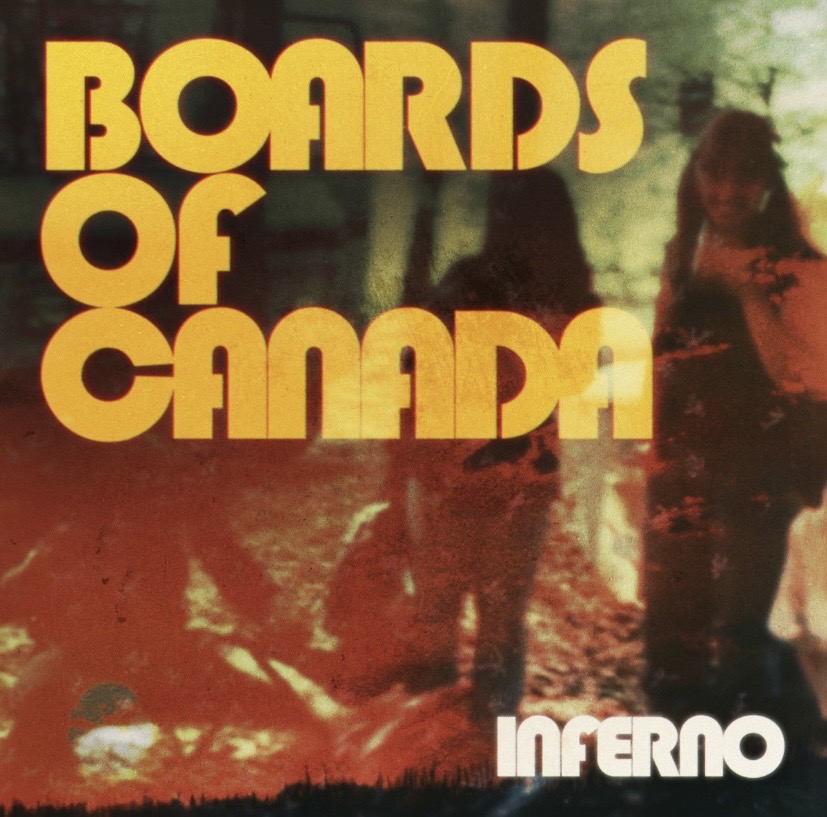
Boards of Canada having a large gap in between albums isn’t exactly out of the ordinary, but 13 years? That’s a long time. A lot of us were starting to wonder if we were going to hear from the Scottish duo again, and if so, would it be necessary? Do we need a new Boards of Canada album? Considering their impressive discography of music laced with nostalgia, soaked in retro synths, and rich in ambient atmospherics, the two already have an iconic body of work under their belts. The already mysterious and reclusive duo could have disappeared from the music world completely, which would have added to their mystique, and even though most of us would want to hear new music from the two, this would have been a fitting bow out, but 13 years after their album Tomorrow’s Harvest, it’s evident the duo have more to give, and my God they’ve gifted us with one of their most captivating, hypnotic, and thematically dense albums yet. The album is titled Inferno, and opens with the track “Introit,” which takes its name from the opening of a worship service that’s usually a psalm, hymn, or chant, and the familiar synth arpeggio featured on the track immediately transports us to a world we’ve missed. I liken it to the feeling I had when I saw the opening crawl to Star Wars: The Force Awakens in theaters, but unlike The Force Awakens, what follows this intro is enthralling content. After the familiar sound in “Introit” fades away, we’re immediately introduced to a reinvented Boards of Canada. Sure their signature style is still there, but that sense of childlike wonder and dreamy Retro-futurism takes a back seat while eerie soundscapes, moodiness, and haunting vocal samples are front and center, and I mean it when I say these vocal samples are haunting. Packed with themes such as religion, religious cults, existentialism, and biology, this album perfectly utilizes vocal samples taken from documentaries about the effects of PCP, a conversation between a father and his son who has cut off his entire family to join the “Children of God” cult, Aleister Crowley quotes, a documentary about the development of a chicken embryo, and references to Nostradamus, and this all perfectly gets the duo’s point across without them having to say a word. However, is their point really that clear? Sure they want us to take something away from this album, or else they wouldn’t have made this thing so dense, but I’ve seen countless heady reviews of this album from people claiming with certainty that this album is a critique of religion and religious cult leaders who prey on the vulnerable, or that this is their way of commenting on how our uncertainty on the meaning of life and why we’re here has spawned so many philosophers and religions who try to give us answers on why we’re here and what happens after we die, and the dangers that come with certain religions, and though this is likely what they’re getting at, there’s one thing a lot of people are neglecting to mention when describing this album, and that’s nostalgia. Nostalgia is a word often associated with Boards of Canada. From the children’s TV show and speak and spell samples on Music Has the Right to Children, to the capturing of the feeling you get when you watch your favorite video nasty on Tomorrow’s Harvest, it’s been very clear that retro media has made a lasting impact on the duo, and contrary to popular belief, I don’t think that nostalgia is absent on Inferno. Remember those televangelists your grandparents used to watch? Those frightening red-faced crazy-eyed men who would yell at you through the TV screen? Remember those old documentaries about morbid cult tragedies? Remember all the history we’ve learned about violence and unnecessary wars that were brought on by fundamental religious beliefs? Remember satanic panic? These are all things that are engraved in the history of humanity, and one of the most popular mediums used to teach this history is media, so I don’t think it’s a stretch to say the boys from BOC have nostalgia for these things. That love for retro media is perfectly combined with the overall themes of this record. There’s no telling if there’s going to be another Boards of Canada record after this one, and when that’ll be if there is, but if this is their final album it’s an interesting album to end on, considering it’s their darkest work by far. Maybe that’s where they’re at mentally when viewing the current state of the world, because these are truly frightening times. Christian fundamentalists and conspiracy theorists are currently in the White House, educational programming has been replaced with short-form content online spreading misinformation, and all of these current wars have left many of us anxious and frightened, so it’s no surprise that an album like this would be released in this day and age, but a common theme that prevents this album from being complete doom and gloom is the theme of life itself. From the EKG machine sounds on “Memory Death,” to the heartbeat on the closing track “I Saw Through Platonia,” the preciousness of life is beautifully symbolized, and this reminds us to value life while we can, and though it may seem impossible at times, it’s important to find beauty in the chaos.
Written By: Steven Sandoval

